The UK Preppers Network has moved to a new site, I will keep this blog open as a re-direct point. Please click HERE and bookmark my new site.
Thank you for making my show the UK's premier preppers and survivalist radio show.
Tom
Sunday 6 September 2015

Monday 31 August 2015
Show Contents 31st August 2015
Show Notes
I start this weeks show with my survival knife the Titan, then the Wilderness Gathering 2015 Report, Blizzard Survival 2% Discount offer, How To Purify Water – Water Purification Process, The Get Home Bag? The Ribzwear 30% Discount offer, What is Emergency food? My Thoughts on EMP, the Wilderness 121's 10% Discount offer, The Bug Out Week North East 2015 is Coming, Homemade Cheese, Survival Cooking Risks, the Midimax 10% Discount offer, What Goes Into You BOB? Little Boy, the Field Leisure 10% Discount offer, Has Anyone Tried This? The BUGGRUB 10% Discount offer, The Deadly Enemies to Your Survival, the Hunters-Knives 10% Discount offer.
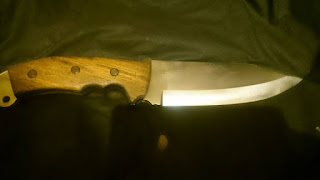
Titan with Micarta Handle
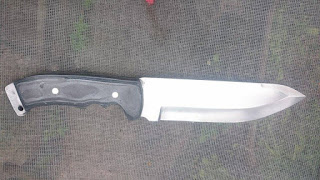
A Zippo on Titans back

Available Spaces
All spaces are designated specific areas at the Bug Out Weekend location that are suitable for that type of bugging out system as the location is a wild managed area and has a range of different types of ground.
All the places listed here are for the tree covered areas of the location.
1. Hammocks:-----------------------40 spaces 31 left
2. Tarps and tents------------------40 Places 25 left
3. 4x4 and off road vehicles------15 places 10 left
4. Camper van's and trailers----10 places 8 left
5. Tipee------------------------------- 4 Places or a Family of 5
Admission Fee
£20.00 for adult over 16 years
£10.00 for child under 16 years
Free for child under 10 years
For the Tipee there is a extra £5 per person.
Traders and promoters are welcome for no extra cost to the entrance fee.
Once payment has been made Ian will send you your payment receipt reference number.
I start this weeks show with my survival knife the Titan, then the Wilderness Gathering 2015 Report, Blizzard Survival 2% Discount offer, How To Purify Water – Water Purification Process, The Get Home Bag? The Ribzwear 30% Discount offer, What is Emergency food? My Thoughts on EMP, the Wilderness 121's 10% Discount offer, The Bug Out Week North East 2015 is Coming, Homemade Cheese, Survival Cooking Risks, the Midimax 10% Discount offer, What Goes Into You BOB? Little Boy, the Field Leisure 10% Discount offer, Has Anyone Tried This? The BUGGRUB 10% Discount offer, The Deadly Enemies to Your Survival, the Hunters-Knives 10% Discount offer.
Here
is my "SURVIVAL BLADE" the Titan
It
is designed by me and hand-made by a true craftsman Mr David Tilling
from Welsh Knives, his Face Book page is here.
https://www.facebook.com/WelshKnives?pnref=story
Titan is an all rounder, built of 8 mm. 01 steel, hardened and tempered with a choice of wood or mycarta scales and a leather or kydex sheath. I think it is "THE" survival blade.
Titan is an all rounder, built of 8 mm. 01 steel, hardened and tempered with a choice of wood or mycarta scales and a leather or kydex sheath. I think it is "THE" survival blade.
Titan with
Wood Scales

Titan with Micarta Handle

A Zippo on Titans back

The
Wilderness Gathering 2015 Report
Well
I am just nicely back from the Wilderness Gathering and what a
fantastic weekend it was.
Meeting
old friends and making news ones while eating the finest of food and
drinking the finest of beverages.
Imagine
Elk stew, Bison burgers, Organic cakes, flavoured Jerky, Pancakes,
and of course the British breakfast of Sasuage, Bacon and Eggs, Oh!
and not forgetting, Fine Tea's, Coffee's Somerset Cider and Meade,
all these things added together almost garuntee success.
Those
of you who have never been should seriously consider booking for next
year.
This
year there was even a party of preppers and survivalists from the
Netherlands which was great and having spoken to them, they say that
they really did enjoy their visit and all said roll on next year.
I
really want to thank some very special people, without whome my
weekend would have been very much diferent.
Roger,
Dominic and their staff are the kindest most caring people, and I
want to thank them very much for allowing me to use their staff
toilet, for providing a taxis service to and from my classroom, and
for taking time to look after me, making me feel safer to be honest.
Peter
Martin you are a star my friend thank you,and cheer's to you and I
wish you good luck and a lifetime long marriage to you and your very
special lady.
Charlie,
what can I say my friend, but my deepest thanks for your caring and
support, Charlie tried his best to re-name the Titan and all I can
say is watch this space.
I
hope that next year Fiona will be able to attend, as I missed her
this year. Fiona don't forget the water to go bottle for your trip to
lios, and have a great time.
Bear
Foot Bob, now known as Up and Down lol, thank you for your photo's
and video's mate, it was great to see you again. Thank you also for
fetching and carrying.
Joe
and Jackie you are true friends, thank you for being concerned and
for offering help when needed.
Fraser,
George, Will, Pablio, Sonni, Ash, Madhi and many, many others it was
really great to see you all again.
Blizzard
Survival 20% Discount Offer
Blizzard
Survival .com have a fantastic offer for you the listener they are
offering a 20% discount on all goods bought from them at
www.blizzardsurvival.com
The Ultimate in
Lightweight Thermal Protection.
The Blizzard
Survival Brand incorporating Reflexcell™ material has become the
new standard wherever thermal performance in a lightweight compact
package is essential - for military use, casualty care, emergency
preparedness, disaster relief, personal survival, outdoor
activities...and more.
Reflexcell™
products are totally unique: weight-for-weight far warmer than goose
down, yet 100% weatherproof, tough, ultra-portable and re-usable.
Life-saving
technology has never been so affordable.
All you have to do
to get a 20% discount is enter the code “PREPPER” at the
checkout, it is that simple. Thank you Blizzard Survival.com
How To Purify
Water – Water Purification Process
“Water, water
everywhere and not a drop to drink,” as the old saying goes. A more
apt statement for these times might be, “water, water everywhere,
but is it safe to drink?” And if it’s not, what is a reliable
water purification process?
Whilst at school I
was taking part in the DOE silver award and climbing slieve Binion in
N.I. it was in the high 70's, I was thirsty and there was this clear
running stream coming down of the mountain. Yes I had a drink and
then filled my water bottle too.
Would I do that now
knowing what I now know no way, unless it was a life and death
situation of course.
Sadly, in this day
and age there are few, if any, places where the water is safe to
drink without treating, no matter how pristine and inviting it may
look.
Water in the wild
often contains harmful microorganisms, bacteria and parasites that
can cause a variety of ailments, such as giardia, dysentery,
hepatitis, and hookworms. Luckily, however, I am going to cover a few
simple ways to purify water to make it safe for consumption.
The
simplest method to purify water is probably boiling.
You need to bring
the water to a full, rolling boil to be safe. The down side to
boiling your drinking water is that it removes the oxygen and the
water ends up tasting flat. You can improve its quality by pouring it
back and forth between two containers to put oxygen back in, or
simply shake it up or better still add a powdered juice mix..
Water
Purification Process: purifiers
There
are also several chemical
purifiers
on the market. Iodine (Banned in the EU), available at www.iodine.com
comes in either liquid form, (which can be messy), or tablet form.
One to two tablets
or drops will clear up a quart of water. Shake your water bottle or
container and wait twenty minutes before drinking. Water treated with
iodine will have a darker colour and a bit of an unpleasant flavour.
It is possible to
mask this flavour by adding a powdered drink mix, but be sure to wait
the twenty minutes before adding it, as it will interfere with the
iodine’s effectiveness.
Other chemical
treatments to purify water that work similarly to iodine are chlorine
tablets and potassium permanganate. You should be able to pick these
up fairly cheaply online.
You can even add a
few drops of bleach at a pinch, though I wouldn’t recommend
overusing this one. It is important when using chemical purification
to make sure all surfaces have been decontaminated.
After waiting the
twenty minutes, slightly unscrew the lid of your water bottle or
container and rinse around the threads and lid. The nice thing about
using tablets is the container is very small and portable and can be
slipped into a pocket, a plus if you do not want to carry a stove or
pot, or take the time to boil water. Chemical treatment can be done
on the hoof with minimal stopping time.
Water filters
A
third method of treatment is commercial
filters.
These come in all shapes, sizes and price ranges. Most work by
pushing the water through a charcoal or ceramic filter and then
chemically treating it.
Normally, they have
one hose with a float that goes from the water source to the filter
and a second hose, for clean water, that goes from filter to water
bottle. When using this type of filter it is important to not cross
contaminate the hoses.
Keep the clean hose
in a separate plastic bag so it never touches the contaminated hose.
The plus side to
this method of how to purify water is that there is no flat or funky
flavor. Commercial filters are also good for when the water is on the
murky or dirty side, as they will remove this also.
The drawback is that
the sediment or tannins that you are filtering out will quickly clog
up the filter.
Some
can be cleaned, with others you need to buy a replacement filter.
Like all technical equipment, cost and breakage are things to be
considered. I prefer the new range of water bottle filters like the
watertogo, NDūR
Survival Canteen, OKO and many, many others.
Primitive Methods
Beyond these common
methods, there are more primitive techniques for the serious
survivalists (or the unlucky person who was caught unprepared).
One
is filtering through soil or, preferably, sand. Keep
rinsing the water repeatedly through the sand until it is looking
clear.
A variation of this
is to dig a hole near where the source is and use the water that
filters through into the hole.
Be aware, that
although soil is a good filter for sediment and other particles, it
is not a guarantee for things like bacteria. This is even true for
spring water, which many people assume is safe to drink without
treatment.
Distilling
is a method that can be used for either collecting water or getting
fresh water from salt water.
To collect water
from the ground, dig a deep hole and place a collecting container or
water bottle in the centre.
Cover the hole with
a clear sheet of plastic. The plastic needs to be weighted in the
centre with a rock or heavy object so that it points down into the
container.
Then, secure the
sides of the plastic tightly around the hole, such as by covering
with dirt. The clear plastic acts like a greenhouse. The water in the
soil or a container evaporates as it heats up. When it hits the
plastic it runs down to the point and drips off into the container.
This is basic a solar still.
If all you have is
salt water, you can distil it by placing a small pot inside a larger
pot. The salty water goes in the larger pot but not the smaller one.
Invert a lid over
the pots that will point down into the smaller pot, then bring the
water to a boil. As the water boils, fresh water will evaporate, hit
the lid and drip down into the smaller pot, leaving the salt, or
other minerals behind.
An alternative if
you don’t have a smaller pot is to put a cloth over the pot the
will absorb the steam. Use caution when removing it to wring it out
so you don’t get burned.
Above all, be
cautious and use common sense when choosing where to gather your
water.
Do the plants
surrounding it look healthy?
Are there dead
animals near by that might have contaminated it?
Don’t collect any
water that looks stagnant. Unless you have a commercial water
filtration system. Generally, water that is further upstream will be
cleaner than that downstream, but there are no guarantees.
Don’t
automatically go for the fasting rushing water, as fast water carries
more sediment. You can avoid picking up a lot of sediment by making
sure you dunk your water bottle completely under the water. This will
avoid all the dirt and debris that floats on the surface.
With so many ways to
purify water, there should be something for everyone and no reason to
ever take chances drinking untreated water.
There are die-hards
out there who will argue that the risk is small and not worth
worrying about. But a nasty case of beaver fever in the back country
can be not only uncomfortable, but life threatening.
Diarrhoea and
vomiting can cause serious dehydration and sap your strength to the
point that you cannot get yourself to safety.
If you are going to
spend time in the outdoors, always make sure you have at least one,
if not two or more, methods for purifying water.
It’s vital to know
water purification process methods.
The Get Home
Bag?
A get home bag is a
backpack that is fully stocked with everything you would need to get
back home if you found yourself stranded away from your home, say at
work or in transit.
You should keep your
GHB in the boot of your vehicle and only use it in emergency
situation.
By keeping a get
home bag in your car, you will maintain a peace of mind that if you
were to ever find yourself stranded with a broken-down car, you have
everything you need to get yourself back home safely.
When you do get
home, you should have a much larger supply of items you would need
for emergencies your 72 hours BOB.
Next up is the most
important question people have about get home bags – what are you
supposed to put in it? Well here is a list of the most important get
home bag contents.
Of course there are
dozens of other items that are also suitable for a GHB and I would
advise everyone to customize their bag to fit their lifestyle.
This includes any
special medication that you can’t go more than 1 day (or longer)
without. Along with medication there are surely other personal items
that would be absolute necessities for your own personal bag like an
epipen or inhaler if necessary.
Breakdown of Must
Have Get Home Bag Contents
The Bag
A backpack of some
kind is the best choice – it’s just easier to carry than any
other type of bag.
Being stranded and
walking home could take several hours plus depending where you are,
so you will want something light and water resistant. Any unused
backpack could be fine, but if you’d like to purchase a bag just
for your GHB, go with a tactical, lightweight backpack.
Food
Obviously you want
to go with something with a decent shelf life which is why I
recommend MREs or granola/energy bars.
In a 24-hour period
this is all you would need to survive and also the easiest and
quickest way to get nutrients into your system.
Water
Much more important
than food is water of course. Staying hydrated is a big part of
surviving emergencies.
I suggest that you
keep multiple bottles of water in your bag. Even though they can add
substantial weight, storing multiple water bottles can be essential
if you are stranded with other people. Or get yourself a water
purification bottle.
Money
A prepaid credit or
debit card could be a good idea – but the universal form of money
is cash. In the event of an emergency credit card processors can go
down and transactions would be cash only.
I suggest having as
much as you can, but distributed around your body in small amounts.
If you are stranded and can’t get home, finding the nearest hotel
could be key, and you will need to have the cash to be able to pay
for one night’s stay.
There are countless
other necessities that cash will be able to buy you in an emergency.
First Aid Kit
This one’s pretty
obvious. Things can happen and wounds need to be addressed big or
small. You also may want to throw in some travel sized
over-the-counter pain-killers or stomach relievers.
Footwear
An emergency can
strike at any time and you could be wearing the wrong footwear. You
could be wearing dress shoes or sandals, so having a pair of boots or
shoes in your bag or even your boot could be extremely important.
An emergency could
mean that you have to walk through a wooded area, snowy terrain, or
very wet ground, so a good pair of comfortable hiking boots or shoes
are very important.
Plastic Rain
Poncho
A practical addition
to your bag is a plastic rain poncho to guard you from the elements.
Being stranded with cold and wet clothes can cause more problems than
just being uncomfortable like hypothermia in cold temperatures.
If your poncho is
big enough, or if you have more than one, you can even use your
poncho as a makeshift tent/shelter.
Work Gloves
A good set of work
gloves can also come in handy in several ways. In colder temperatures
even thin work gloves are better than nothing if you don’t have
winter gloves or mitts.
If you find yourself
needing to work with your hands during an emergency a quality set of
work gloves will help you get a better grip on everything and also
protect your hands from scratches or cuts.
Clothing
Just like with the
footwear mentioned above, you aren’t always in ideal clothing for
emergencies. Make sure to have a change of clothes in your get home
bag and keep it appropriate to the current season.
Plan a time at least
2-3 times per year to re-evaluate your bag – especially the current
spare clothes.
Lighter
Even a cheap lighter
can be crucial to aiding in survival, at the least you should have a
simple cigarette lighter in your bag. I would suggest going above and
beyond and including some tinder/paper or even special tools for
lighting fires like a ferro rod and striker that even work in wet
conditions.
Multi-function
Tool
A good multi-tool is
essential and needs to be in your bag. Most multi-tools will have the
important features, but make sure to grab one that isn’t too small.
Your multi-tool
should have a good set of pliers, scissors, a knife, a file and a
mini-saw.
Flashlight
A good
torch/flashlight is a must have for any GHB. You may also want to
include extra batteries just in case.
A powerful
flashlight won’t just help you see in the dark, but will also help
you get found if you are ever lost in the darkness.
Wet Wipes
You won’t always
be lucky enough to be stranded somewhere with a bathroom – so
keeping some wet wipes at hand will help keep you clean. They also
serve a dual purpose for when nature gets messy and you need to clean
your hands or body and don’t have soap.
Medication
This one you need to
use at your own discretion. Some lucky people don’t have any daily
medication they need to take.
Other people will
need to customize their bag even further with a 1-2 day’s dosage of
their own medication. You should also include some over the counter
medicines or if necessary, feminine products.
Some
people can overlook this step but keeping non-expired
medicine in your bag can be just as important as anything else.
Self-Defense
Whatever you’re
comfortable using for self-defense should be in your GHB. From
non-lethal forms like UK defence sprays, to very lethal forms like a
handgun or a knife, you need to have some sort of defense mechanism
at hand.
If you select to
include a firearm in your bag it is important that you have necessary
permits to stay within any legal parameters in case you get pulled
over and searched.
Writing Utensils
One useful item that
will barely take up space or weight is a simple ballpoint pen. A good
idea is to have one or two different pens in case you need to write
down anything from directions, phone numbers, or anything else of
importance.
Go with a pen over a
pencil – a pen can write on more types of surface than a pencil –
including your hand if you need to jot something down quickly and
don’t have paper nearby.
Other Items
A get home bag can
only be so big, so obviously you won’t be able to fit everything
you want inside of yours.
If however you do
find that you have some extra space, don’t hesitate to add one or
more items from our “If Room Permits” list.
Be careful though,
because even if you can fit it in your bag – if it’s too heavy
for you to walk up to several miles with, you may want to leave some
things out so that you aren’t encumbered.
Try to keep an old
mobile phone in your bag or car that is fully charged and powered
off.
Do not for get a
road map that covers the area between where you are and your home and
an OS map just in case the roads are blocked and you have to walk.
Important Vehicle
Items
Your bag doesn’t
have to be the only helpful item in your vehicle. There are several
other things that should be in your vehicle to aid in any sort of
emergency situation. Here are items your vehicle should have:
Roadside assistance
kit
Spare tire, tire
jack & iron
Tire pressure gauge
Fix-a-flat
Jump leads
Your vehicle’s
manual
Maps
An old piece of
carpet if you need quick traction
Road salt or even
cheaper cat litter
A shovel
When Would you
Need a Get Home Bag?
Hopefully you never
have to use your bag, but there are many events that could occur
where your get home bag could save your life.
Here are several
emergency scenarios where you will want to have your bag with you.
Natural
disaster/snowed in by a blizzard
Power cut
Broken down vehicle
Terrorist activity
Regardless of how
‘likely’ any of the above scenarios are, making a get home bag
could be the most important thing you ever do.
If you already have
a GHB, I hope that the above list can help you improve it.
Please check any
expiration dates on the items in your bag. If however you do not
currently own a get home bag – please use the this information to
help yourself become better prepared for an emergency.
BREAK
You are listening
to the UK preppers Radio network on KPRNDB-UK I’m your host Tom
Linden
30% DISCOUNT
FROM RIBZ
A front pack is a
pack or bag that allows for access of equipment from the persons
chest. Front packs first and foremost allow for easy access of gear
without the removal of any equipment.
In many adventure
outdoor activities it can be critical to the sport to have the
ability to reach essential gear fast without the removal of a
backpack. Simplicity is the foremost purpose of the front pack but
there are many additional benefits as well.
In all there are
unlimited uses for the front pack. Front packs are the best
compliment to any outdoorsman’s gear when accessibility,
functionality, mobility and simplicity are required. From horseback
riding, long distance biking, motorcycling and kayaking.
All sports where
fast and easy access of gear is essential, a front pack is your best
solution and as you can imagine it is going down a storm within the
prepping and survivalist community.
Your
summer code is "TRAILBLAZE"
and can be used in the coupon section within the Store.
http://www.ribzwear.com/store/
Have a Great Summer!
What is
Emergency food?
Emergency food is
food that you simply store for emergency purposes.
To expand, it is
food that can be and has been stored for the single purpose of being
consumed in times of disasters where you and your family are cut off
from your primary food source (e.g. market, shops, farm, etc.).
Emergency food
supplies can consist of foods that you normally eat, but had been
bought in excess from the weekly trip to the supermarket and stored
for this very purpose.
Emergency food
supplies generally consist of commercially packaged food – that is
tinned, freeze dried food and the like, which may be stored for a
long time, up to 25 years and beyond, without special storage
requirements like refrigeration.
Or they may be
handmade preserved items which can be done through canning, pickling
and other methods of preservation.
Why is Emergency
Food important?
The importance of
emergency food stems from the need of man to eat food in order to
survive.
Emergency Food is
like insurance it is an investment, one which can most likely be used
to ensure you and your family’s survival through any disaster,
short or long term, that may prevent you from accessing and
purchasing food from an outside source.
Emergency food
serves as security for you and your family I would say by means of:
Boosting
morale and keeping stress levels low
– When there is food, people are less inclined to panic safe in the
knowledge that they have access to life’s critical commodities and
therefore will more likely to have a clear mind in order to make
decisions with regards to during or post-disaster agenda.
Nourishment
for the family even without the convenience of purchasing food
– In case of financial crisis, emergency food, when continuously
stocked, can become long term survival food and can aid your family
by having money spent on more vital matters than food (since you have
it stocked already) which may become overpriced in these types of
crises.
In a nutshell,
having emergency food is being prepared for almost anything, and
being secure knowing that you have sustenance even during times when
it is not readily available and others may not.
What methods do
people use – Freeze Dried, Canned, Rotation, Buckets?
There are many
methods for storing emergency food, some of which are discussed
below.
Freeze dried food
are foods – be it raw ingredients, staples or even cooked meals –
which have gone through the process of freeze drying.
Freeze dried foods
are often mixed up with another preservation method, dehydration,
mostly because of their preserved state, but their processes are
definitely different from each other.
Foods that will
undergo freeze drying first need to be checked before going through
freezing, which will require that every inch of the food be frozen.
After which the
water is removed through the process of sublimation – the process
in which solids turn to gas without passing through the liquid phase.
Commercially
packaged freeze dried food – such as have a guaranteed shelf life
of over 25 years – meaning it can stay in a cool dry place without
other special storage facilities without spoiling.
There pre freeze
dried meals, though the best and most valuable solution over the long
term, can be high cost initially and thus not for everyone. However,
there are ways in which people can freeze dry food parcels at home.
Canning is one of
the more popular food storage methods. This is the method in which
food is processed (either commercially or at home) and stored in
air-tight cans or jars for long-term use.
Food is first
preserved – there are many ways to preserve food – and are placed
in sterile, air-tight containers.
Rotation is a food
storage method in which emergency food can be stored for its intended
use and is rotated for the food to be replaced and consumed before
its best before date.
Rotation can also be
done not only for emergency food, but for those storing food for
normally.
By taking note of
the date it was purchased or the date it will expire or quality
starts to deteriorate, one is able to consume stored goods without
fear of wastage.
The bucket system is
another food storage method wherein foods with a high shelf life are
stored in high-food grade buckets along with oxygen absorbers or
other methods for removing oxygen for long term food storage.
There are others who
combine the food grade bucket with other food storage methods, such
as Mylar bags and even freeze dried food – these combinations can
also be another form of rotating food supply by combining food with
similar best before dates.
My
Thoughts on EMP
So
in the middle of the summer an enemy explodes an EMP weapon high
above the earths surface, say between 50 and 100 miles up.
Northern
Europe is hit by a massive Electromagnetic Pulse. Instantly
everything with a chip is rendered useless.
So
all cars, buses, lorries, trains, areoplanes, communications, power,
water, heating, lighting and this includes our "just in time
transport delivery system" too will be as if they never existed
at all.
Within
a flash we are back in the 1800's. But this time we have no reliance
on horses for farming, transport of goods or people.
Our
toilets will not flush, our kitchen white goods will not work, our
money will be trapped in an electronic banking system that no longer
functions.
Credit
and debit cards will be useless pieces of plastic.
Common
values, morals, respect, civil obiediance, honesty and consideration
for others will go out the window in peoples desperate fight to grab
whatever they can before someone else does.
Then
the deseases will begin to take hold, TB, coleria, the medical system
will also back in the 1800's, no more ambulances rushing you to A&E,
no more operations, no more fire service to rescue your cat or to put
out life threatening fire storms as they rage across the cities
uncontrolled.
No
more police to come to your rescue and save you from whatever. No
more 999.
Absolutley
horriffic I thing you will agree.
But
as I sat at my laptop this morning I thought of another problem our
modern society has produced, something that I have never seen covered
before in prepping and survival shows and articles.
On a typical weekday
in last year, 535,000 passengers arrived in central London by train
in the morning peak time of 07:00 to 09:59.
On
average, a total of 977,000 people travel into London by trains alone
throughout each day.
Add
to that planes, buses, cars and bikes and the figure is over
2Million.
Imagine
that number of people trapped in some cases hundreds of miles from
their homes. Imagine again those people without GHB's, accommodation,
water, food, prescription medicines, communications, proper clothing,
footwear,or their families and loved ones.
Ostensibly
you now have up to 2million refugees in the London. Who will house
and feed them, water and cloth them, medicate them protect them.
Imagine
if you were one of them what would you do?
Of
course every major UK city, town and even village will be affected in
much the same way although the numbers in each case will of course
vary.
I
said imagine this happening in the middle of summer. And I picked
this time of the year for one reason.
On
average an amount of 60 million go on holiday each year.
However
45 million of these people go on their holidays in the summer months
from June 25th - August 31st Of these 45 million people only a mere 6
million people go in groups of friends each year.
So
now they have the very same problems London commuters will face but
magnified many times because now they are thousands of miles away
from home, in a foreign country. They will have to contend with a
different culture, language, laws and way of life.
Oh!
and now that they are not holiday makers any more, but refugees,
there will be no more bacon and eggs for breakfast, no more British
beer, no more Insurance cover, so no more medical treatments, no more
money.
And
I would suggest no more ways to get back to their loved ones in the
UK.
Imagine
that, so what would you do?
Before
you go, use google earth etc. to reckon the area you are going to
for,
Rivers,
lakes, streams, swimming pools, fruit trees and crops in general.
Shops selling camping equipment, hospital and medical centre
locations, police stations, shopping centres, fishing tackle shops,
in fact the list is endless and limited only by your imagination.
In
my opinion I think that every time you pack your suitcase for your
holidays you are in fact Bugging-Out.
So
bearing in mind what I have said perhaps some additions to your
normal holiday items would be prudent.
Yes
I know that luggage weight restrictions are a concern, but how many
of us come back from a holiday with items of clothing that we have
not worn?
Anyway
you could always pay a little extra if you go over your 22kgs.
However
what I have in mind should not weight too much at all.
These
are the extra items I would pack, and I know it is not an exhaustive
list by any stretch of the imagination, and that you will add to it
yourselves.
Map
of Holiday Country
Local
language phrase book
Emergency
supply of prescription medications.
Water
filtration bottle each
Copy
of your home deeds
Contact
numbers
Bank
details
Torches
for each plus spare batteries
Multi-tool
each
Hidden
extra cash each
Decent
footwear
Spare
glasses
Feminine
products
Emergency
meet up plan if separated while on holiday.
If
you are in a holiday complex then I suggest that you get everyone
together and have a general meeting and decide what you all want to
do.
I
would ask the complex/hotel staff what they suggest, but do not leave
your accommodation as it is at least a roof over your head, and if
you do it may be denied to you upon your return.
There
is of course a chance that the RAF/Navy will be able to take you
home, that is if their planes and ships still work, and they are not
involved in a shooting war.
If
you are in a villa, camp-site, taverna, camper, caravan, tent
whatever then you are on your own in real terms. But a lot of what I
have said will still apply to you in any case.
I
think that those stranded abroad post an EMP attack will have to make
the best of their lot and resign themselves to life outside the UK
for many years to come if not for ever.
Wilderness121’s
10% discount
The new supplier of
Purificup to the UK is Wilderness121 and they really mean business,
having spoken to the director Rob Williams he has agreed to offer you
dear listener a 10% discount just by putting the letters UKPRN into
the code box it is that simple.
Now
pop along to www.wilderness121.co.uk
and check out their great range of survival related products.
The
Bug Out Week North East 2015 is Coming
Please read the information about the Bug-Out weekend before you say that you are going as there is a £5 non refundable deposit to pay for your place as all the places are limited.
You must say what the deposit is for in the notes on paypal before you send payment and what system you are using to bug out.
Here is the paypal address to make payment to is below;
ijc1197@yahoo.co.uk
with other like minded people
For any further information, just give Ian a call on this number.
Mob: 07926086048
Please read the information about the Bug-Out weekend before you say that you are going as there is a £5 non refundable deposit to pay for your place as all the places are limited.
You must say what the deposit is for in the notes on paypal before you send payment and what system you are using to bug out.
Here is the paypal address to make payment to is below;
ijc1197@yahoo.co.uk
with other like minded people
For any further information, just give Ian a call on this number.
Mob: 07926086048
Available Spaces
All spaces are designated specific areas at the Bug Out Weekend location that are suitable for that type of bugging out system as the location is a wild managed area and has a range of different types of ground.
All the places listed here are for the tree covered areas of the location.
1. Hammocks:-----------------------40 spaces 31 left
2. Tarps and tents------------------40 Places 25 left
3. 4x4 and off road vehicles------15 places 10 left
4. Camper van's and trailers----10 places 8 left
5. Tipee------------------------------- 4 Places or a Family of 5
Admission Fee
£20.00 for adult over 16 years
£10.00 for child under 16 years
Free for child under 10 years
For the Tipee there is a extra £5 per person.
Traders and promoters are welcome for no extra cost to the entrance fee.
Once payment has been made Ian will send you your payment receipt reference number.
This
number is to be presented on entry to the Bug out Weekend where the
deposit will be deducted from the admission cost that is to be paid
upon entry.
Arrangements
Please arrange any train Tickets to Metrocentre Train Station as soon as possible (ASAP) as this will save you money and could be cheaper than your own car.
Ian can arrange to pick you up from there and drop you back off for a fee.
Arrangements
Please arrange any train Tickets to Metrocentre Train Station as soon as possible (ASAP) as this will save you money and could be cheaper than your own car.
Ian can arrange to pick you up from there and drop you back off for a fee.
The cost of this
service is to be arranged.
Or you can take a bus from the Metrocenter to Greenside and someone will pick you up there too as it is only about a mile away at that point.
Or you can take a bus from the Metrocenter to Greenside and someone will pick you up there too as it is only about a mile away at that point.
The
bus journey takes about half hour.
Please let Ian know as soon as possible if you require this service.
Ian says he will post any bus times and services as soon as he gets them, or you can just Google it.
Facilities
Toilet areas will be allocated
There will be ranges for Archery, Crossbow, and Air rifle.
There will be a solar Shower available with hot water if needed.
You can order two breakfasts, both for a fee of £5.00 per head.
One of them for the mornings of the Sunday and the other for the Monday that consist of:
Sausage, Bacon, Egg, Black Pudding, Mushrooms, Beans and Tomatoes
These come in a half large Stottie or Bap and are very filling
Just a quick one
Ian says he really does hope to see you there as we had a great time with the Bug Out Weekend meeting Back in May 2014.
The weather was amazing even though the Met Office said it was going to pour down with strong winds and low temperatures,
Please let Ian know as soon as possible if you require this service.
Ian says he will post any bus times and services as soon as he gets them, or you can just Google it.
Facilities
Toilet areas will be allocated
There will be ranges for Archery, Crossbow, and Air rifle.
There will be a solar Shower available with hot water if needed.
You can order two breakfasts, both for a fee of £5.00 per head.
One of them for the mornings of the Sunday and the other for the Monday that consist of:
Sausage, Bacon, Egg, Black Pudding, Mushrooms, Beans and Tomatoes
These come in a half large Stottie or Bap and are very filling
Just a quick one
Ian says he really does hope to see you there as we had a great time with the Bug Out Weekend meeting Back in May 2014.
The weather was amazing even though the Met Office said it was going to pour down with strong winds and low temperatures,
That put a lot of
people off. That was annoying as it takes a bit of effort to say the
least to organise the thing and make it work.
So just come along and Bug Out for the weekend with us and try out your survival systems and learn some new things along the way.
Even if you have never done anything like this before, just bring your camping gear and see what people do.
There are plenty of us to help and give advice. That's what the Bug Out Weekend is all about.
If you need to borrow anything i am sure we can help.
Just let us know in advance.
Make some friends and have a laugh at the Bug Out Weekend it will be what we make it.
We do appreciate your support.
Thanks: Bug Out Weekend ( CUP )
CUP
So just come along and Bug Out for the weekend with us and try out your survival systems and learn some new things along the way.
Even if you have never done anything like this before, just bring your camping gear and see what people do.
There are plenty of us to help and give advice. That's what the Bug Out Weekend is all about.
If you need to borrow anything i am sure we can help.
Just let us know in advance.
Make some friends and have a laugh at the Bug Out Weekend it will be what we make it.
We do appreciate your support.
Thanks: Bug Out Weekend ( CUP )
CUP
Guy's I had the
privilage to attend the May Bug-Out event and if it had not been for
the kindness and generosity of those around me I would not have had
such a memorable and enjoyable time.
Ian goes out of his
way to make every event a great success and those that attend are the
salt of the earth.
So I suggest to
guarantee your place that you book asap.
Homemade
Cheese
What
you will need
4
litres of whole milk, 1 pinch salt, 1 large lemon, juiced
What
to do
1.
Pour the milk into a large pan, and stir in a pinch of salt. Bring to
a boil over medium heat, stirring occasionally to prevent the milk
from scorching on the bottom of the pan.
2.
When the milk begins to boil turn the heat off then stir the lemon
juice into the milk, the milk will then curdle. This may take 5 to 10
minutes.
3. Line a sieve with
a cheesecloth, now pour the milk through the cloth to catch the
curds. What is left in the cheesecloth is the Farmer’s Cheese. The
liquid is the whey.
4. Gather the cloth
around the cheese, and squeeze out as much of the whey as you can.
Then I find it best to suspend the cheese cloth over the sink for
example.
5. When it has
stopped dripping, I put it in an airtight container and put it in the
fridge.
Why not try using
herbs or other flavourings.
Survival
Cooking Risks
So Summer is here
and as preppers and survivalists we head for the woods to practice
for when the brown stuff hits the fan and we bug-out.
You will build a
shelter, light a fire, hunt, trap and fish and then sit around the
fire singing “gin gang gooley” as your food cooks.
It just sounds
idyllic doesn’t it?
But according to
recent figures this could be the most dangerous aspect of survival
camping.
A shocking 94 per
cent of more than 2,000 people questioned for a Government survey
admit to at least one barbecue habit that is a health risk.
Food poisoning is a
real risk at barbecues
Twenty-one per cent
believe they have been ill due to something they have eaten as a
result, the poll for the Food Standards Agency found.
Almost a third admit
to not checking burgers, sausages and even chicken are cooked all the
way through.
Food poisoning is a
real risk at barbecues and we should take good care of our families.
Survival cooking is
bar-b-q cooking is it not? When the shtf there will be no chemist,
health centre, doctor or NHS to go to to sort out food poisoning,
stomach upsets and diarrhoea, all of which will dehydrate you and
reduce your physical ability to provide and survive.
OK I do not want to
teach my grandmother to suck eggs by it never hurts to get back to
basics.
Charred doesn’t
mean cooked, cook your barbecue food thoroughly until you are sure
that your poultry, pork, burgers, sausages and kebabs are steaming
hot, with no pink meat inside.
Avoid
cross-contamination by storing raw meat separately before cooking,
use different utensils, plates and chopping boards for raw and cooked
food.
Always wash your
hands thoroughly with soap and hot water and dry them before handling
your food for the barbecue and after handling raw foods including
meat, fish, eggs and vegetables. (You should of course wash your
hands after touching the bin, going to the toilet, blowing your nose,
or touching pets and other animals.)
Don’t wash raw
chicken or other meat, it just splashes germs. Cooking will kill any
bacteria present, including campylobacter.
On the other hand,
washing chicken, or other meat, can spread dangerous bugs on to your
hands, clothes, utensils by splashing.
Turning meat
regularly and moving it around the barbecue will help to cook it
evenly. Charred on the outside doesn’t always mean cooked on the
inside so, it’s always safer to cut open and check your burgers,
sausages and chicken. If in doubt –keep cooking.
Keep plates and
cutlery away from raw meat and fish, never serve cooked food on a
plate or surface that’s had raw meat or fish on it, and don’t use
cutlery or marinades that have been in contact with raw meat.
There’s no point
in serving up food with a flourish if you’re adding bugs back into
the mix.
Remember whether you
are in a survival situation practising or for real, why risk your
health?
Ken
at MidiMax.co.uk is offering 10% off any product by using the code
Midi10 so check out www.midimax.co.uk
What Goes Into
Your BOB?
Anyone who has read
much about or spent much time around preppers has I would bet have
heard the term B.O.B or Bug-Out-Bag.
The Bug-Out-Bag is a
bag that you can quickly grab as you are heading out the door.
It is already
pre-packed with a number of survival and preparedness items to enable
you to get to your destination safely and establish a recovery plan.
Bug-Out-Bags are generally only designed to contain 48-72 hours of
food and equipment.
Do you need a
Bug-Out-Bag? Chances are, you already have one of sorts. A hand bag,
briefcase, day pack, or vehicle rescue kit all of these are basic
Bug-Out-Bags.
While they may not
have everything you would need to survive for 72 hours, they
generally have the things that you need the most or that are most
important to you.
Cash, medicine, a
lighter or waterproof matches, knife or multi tool; all of these
will fit into handbags, briefcases, and day packs. Put a little more
thought and planning into the design of a slightly larger bag and
you’ve got yourself the perfect Bug-Out-Bag.
The construction and
design of your Bug-Out-Bag is something to bear in mind: some people
prefer a large duffel bag or large shoulder bag, and this may be fine
if you are bugging out by car or truck, but if you’re stuck on foot
a backpack or frame-pack may be more appropriate.
Also consider your
local climate. If you live in a rainy area, or foresee yourself
needing to evacuate from or during severe weather, it may be
important that your Bug-Out-Bag be water-resistant or better still
waterproof.
You will need to
analyse your individual situation and determine what is the most
likely means of transport you will use and what your needs will be
before assembling your bag.
This type of “grab
it and go” methodology is very important to adhere to when
assembling your own Bug-Out-Bag.
The smallest
component of your bug-out set-up should be a backpack sized bag that
is easy to carry, but which can contain the bare minimum of necessary
survival gear.
In an emergency, you
may not have time to pack a bag with necessary items: that’s why
you have a Bug-Out-Bag.
By packing multiple
bags of multiple sizes, you can grab the smallest and most necessary
first and then grab more as time allows. This small survival bag can
also be used as a portable Bug-Out-Bag and carried 24/7 in the boot
of your car as I do.
Such a bag can also
double as a “get me home” emergency bag, should you find yourself
stranded away from the safety of your home.
What goes into a bug
out bag is a very personal choice, and is highly dependent upon the
persons needs and experience.
In general however,
most bug out bags include emergency food rations, first aid or
medical supplies, tools, documents, cash, and various other survival
gear.
Some starter BOB are
available that include the basics and you then customize it to your
personal requirement.
Your bare bones
survival kit contents may vary, but should contain at a minimum cash,
tools like a (knife, sewing kit, multi-tool), food for example (MREs
or energy bars, dog/cat food for pets) and a water
purification/filtration system, duct tape, paracord, personal hygiene
items, respirators or particulate masks, maps and compass a GPS (or
both), fire lighting equipment (tinder, lighter and/or matches),
AM/shortwave radio or communications gear (prepaid mobile phone, CB
etc.), medical supplies (first aid, prescription medications),
poncho, and at least one change of clothing appropriate to the season
and climate.
I would say that
this is the bare minimum that anyone should include in their basic
Bug-Out-Bag.
Many people will
also include various self defense tools ranging from pepper spray to
a personal firearm and ammunition.
While this may not
always be necessary, and may in fact be illegal in some countries, it
is something you should consider when assembling your Bug-Out-Bag.
The minimum I would
say that should include in your BOB is the following.
Food and water (as
much as you can practically carry)
Portable radio and
extra batteries
First aid kit and
handbook
5-day supply of any
medications you take regularly and a copy of your prescriptions
Whistle (to alert
rescuers to your location)
Personal hygiene
supplies (including toilet paper)
Emergency lighting
(e.g. glow sticks, flashlight, headlamp) and extra batteries
Large rubbish bags
and paper towels
Change of clothing
and a hat
Sturdy shoes, in
case an evacuation requires walking long distances
Dust mask
Pen, paper and tape
Cash in small
denominations
Copy of health
insurance card and driving license.
Photos of family
members for reunification purposes
List of emergency
contact phone numbers
More tips:
In children’s
Go-bags, include medical consent forms, a family photo for
reunification purposes and a favorite toy, cards or book.
Include jump leads
in your vehicle’s Go-bag.
Remember to make a
Go-bag for your pet!
When assembling your
Bug-Out-Bags remember that you will be assembling them with survival,
recovery, and comfort in mind in that order.
Your smallest and
easiest to reach bag should be only for survival. If you can grab two
bags or more, the successive bags should have items and equipment
geared towards getting you back on your feet and then providing some
level of comfort.
You should consider
packing smaller ruck sacks inside of your larger Bug-Out-Bags in the
case that you are forced to downsize your load.
If you have geared
your Bug-Out-Bag towards evacuation by vehicle and suddenly find you
are forced to flee on foot, it will be handy to have smaller shoulder
carried bags available to reassemble a downsized emergency pack.
Having a Bug-Out-Bag
presupposes that you already have an evacuation plan already in
place. You do have an evacuation plan, don’t you?
If not, take this
opportunity to put one together. Consider what threats might cause
the need to evacuate and where you might go if forced to flee.
Plan alternate
routes to a number of safe destinations.
Where you will be
retreating to and how long you will be staying will play a large part
in deciding what items will need to be packed in your Bug-Out-Bag.
Little Boy
On August 6, 1945,
Hiroshima, was having clear weather. At 8:15 a.m. (local time), the
Enola Gay's door sprang open and dropped "Little Boy." The
bomb exploded 1,900 feet above the city and only missed the target,
the Aioi Bridge, by approximately 800 feet.
Staff Sergeant
George Caron, the tail gunner, described what he saw: "The
mushroom cloud itself was a spectacular sight, a bubbling mass of
purple-gray smoke and you could see it had a red core in it and
everything was burning inside. . . . It looked like lava or molasses
covering a whole city.
The cloud is
estimated to have reached a height of 40,000 feet.
Captain Robert
Lewis, the co-pilot, stated, "Where we had seen a clear city two
minutes before, we could no longer see the city.
We could see smoke
and fires creeping up the sides of the mountains. Two-thirds of
Hiroshima was destroyed.
Within three miles
of the explosion, 60,000 of the 90,000 buildings were demolished.
clay roof tiles had melted together.
Shadows had
imprinted on buildings and other hard surfaces. Metal and stone had
melted.
Hiroshima's
population has been estimated at 350,000; approximately 70,000 died
immediately from the explosion and another 70,000 died from radiation
within five years.
A survivor described
the damage to people:
The appearance of
people was . . . well, they all had skin blackened by burns. . . .
They had no hair because their hair was burned, and at a glance you
couldn't tell whether you were looking at them from in front or in
back.
They held their arms
bent [forward] like this . . . and their skin - not only on their
hands, but on their faces and bodies too - hung down.
If there had been
only one or two such people . . . perhaps I would not have had such a
strong impression. But wherever I walked I met these people.
Many of them died
along the road - I can still picture them in my mind -- like walking
ghosts
But have wondered
what would happen if the Americans had dropped Little Boy over
Britain instead?
There is a map
called the Nuke Map of the world, which allows the user to see
exactly that.
The map also shows
the destruction other bombs would cause if dropped on London – from
North Korea’s latest weapon test and the world’s largest bomb the
50 megaton Tsar Bomb.
1) Little Boy
(death toll in London 90k)
The atomic uranium
bomb was dropped on Hiroshima, Japan, in 1945 killing 66,000 people
and injuring 69,000. If the same bomb had been dropped over London
now the death toll would be a 90,230 with 272,380 injuries.
2) Fat Man (death
toll 110k in London)
When Fat Man was
detonated over Nagasaki it killed 39,000 and injured 25,000. The same
20 kiloton bomb would kill 110,460 in London and injure 279,520.
3) Ivy King
(death toll 450k in London)
The largest pure
fission weapon tested by America is the 500 kiloton ‘Ivy King’
bomb. If this was set off over London 453,370 people would die and
835,570 would be injured. East Anglia is also screwed.
4) North Korea
(death toll 70k in London)
North Korea’s
latest nuclear weapon test was in 2013 and was a 10 kiloton bomb. If
Kim Jong-un launched this tomorrow over London, he’d kill 69,570
and injure 259,350.
5) Davy Crockett
(death toll 360 in London)
Davy Crockett is the
codename for the USA’s tiniest nuclear bomb – at 20 kilotons.
Only 360 would die in London if this was set off, while 3,190 would
be injured.
6) Tsar Bomba
(death toll 6 million in London)
The Tsar Bomba is
the biggest bomb in the world at a huge 50 megatons. In London this
would kill 5,758,910 in London and injure another 3,396,580.
7) Tsar Bomba –
biggest designed (Death toll 5.9 million in Britain)
The 100 megaton Tsar
Bomba was never made but it was designed. If this was to go off in
London it would kill 5,920,300 and injure 6,048,100.
See
how your town would survive here http://nuclearsecrecy.com/nukemap/
Now
thanks
to the Managing Director Paul listeners visiting Field
Leisure - The Bushcraft & Wilderness Store
at http://www.fieldleisure.co.uk/
can get 10% OFF by entering the code UKPRN at the checkout now Paul
guarantees next day delivery all over the UK and fast European and US
delivery and that is reassuring and refreshing too.
Has Anyone
Tried This
Your compass is a
measuring tool that can be adapted to a variety of needs. It can be
used to measure more than just direction.
You can use your
magnetic compass to determine the width of a stream or small body of
water without having to get wet.
This quick and easy
method of determining distance using a compass may just come in
handy. In any case, it is always a good trick you can use to amaze
your fellow survivors.
Here is how it is
done.
Standing at the edge
of the water, sight an object directly across from you on the far
bank. Take a compass reading on this object and mark the spot where
you are standing.
Walk along the
stream until the compass reading to the same object across the stream
changes by 45-degrees and mark this spot also. Now measure the
distance between the two marks you set.
This will be equal
to the distance between the first mark and the object you sighted
across the stream.
For example:
Say you are standing
next to a stream and directly across from you on the opposite bank is
a large tree. Take out your compass and sight the tree.
Let’s pretend the
compass reads 300-degrees (Azimuth type compass) or S30W (Quadrant
type compass).
Mark this spot and
then walk either downstream or upstream until the compass sighting on
the same tree reads 45-degrees in either direction from your first
reading (either 255-degrees or 345-degrees on an azimuth type
compass, S15E or N15W on a quadrant type compass).
Mark this position
also. The width of the stream is equal to the distance between your
two marks on the ground. If you have practiced pacing (and every
survivor should) you can count the number of paces between the two
marks and calculate the width of the stream.
Peter
at buggrub is not only sponsoring the competition on my website he is
also offering a 10% discount on all his products by using the code
PREPPER. So have you got the gonads, can you walk the walk, dare you,
I dear you to buy some buggrub and then eat it, go on I dare you.
Peter’s website is www.buggrub.com
The Deadly Enemies to Your Survival
When
putting together survival kits, there are 8 enemies of survival to
consider – no matter whether the kit is for someone going into the
bush, or if the kit is being made for a teotwawki situation. Taking
care of these eight issues by stocking up your kit well will go a
long way to ensuring your survival in just about any survival
situation.
Fear:
Fear often
leads to panic and panic does no one any good…in fact it often
kills. The best way to temper fear is by preparing with proper
survival skills and survival gear.
Survival
skills help reduce fear because you know that you can take care of
yourself in a survival situation. Without those survival skills
people who are lost are often so scared they don’t know what to do.
They’re scared of the animals, scared of the dark, scared of being
without all of the comforts of civilization.
Survival
gear helps combat fear because it gives you the tools that makes
surviving easier.
Complacency:
Complacency
is a bane of modern life. Complacency is dangerous because it lulls
you into believing everything is alright and causes you to ignore
clear signs of danger. A good way to combat complacency is by
practicing the art of relaxed awareness.
Relaxed
awareness is similar to the art of meditation….it is achieved by
being fully immersed and aware of your surroundings. A good example
of relaxed awareness is when you are practicing defensive driving.
After you practice defensive driving, you remember the entire drive
because your mind was fully engaged and active the entire trip.
Unfortunately relaxed awareness isn’t something you can pack in a
bag, but you can practice it constantly to help ensure your survival.
Hunger:
Hunger can
nag at you, slow you down, and eventually kill you. Combat hunger by
learning primitive hunting and fishing skills. Make sure that you
have snare wire, survival knives, paracord, a fishing kit and
anything else you can think of that will help you find and secure
game and fish. Also, learn what wild plant in the area are edible.
Thirst
You will
die in only a few days without water. Depending on your activity
level and the environment, you will need at least a gallon of water a
day. Knowing how to locate, store and decontaminate water is
essential. Always carry a way to store and decontaminate water.
98.6
degrees Fahrenheit
If you
can’t keep the core temperature of your body at 98.6 degrees, you
are in a world of hurt. Cody Lundin of “Dual Survival” fame
covers this reality very well in his book “98.6 Degrees: The Art of
Keeping Your Ass Alive“.
You need
to be able to protect your body from both heat and the cold. Always
have a way to make a quick emergency shelter in your survival kit.
Bivy sacks are lightweight and take up very little room. You also
need several ways to start a fire in your kit. Also, always have
clothing in your survival kit that is rugged and made for the weather
of the season that you are in.
Pain
Avoid
pain at all costs. It can cripple or at the very least slow you down
to the point that you are in imminent danger of losing your life. If
possible, carry medications to deal with it. Injuries are more likely
when one panics or is fatigued.
Fatigue
Getting
overly tired or fatigued makes the chances of injury greater and
increases the dangers of exposure. One important thing to understand
is that fatigue affects your mind just as much as it does your body.
Arctic explorers discovered that if you sleep when you need to rather
then pushing on, you will wake up when you become cold. If you push
on till you collapse from exhaustion you’ll freeze to death instead
of waking up.
Boredom
Boredom is
like a cancer that slowly eats away at morale. It is always a good
idea to keep a way to entertain you in your survival kit. Something
as simple as a deck of cards can do wonders for fighting boredom. To
this one you can add loneliness…if the survivor is alone.
Loneliness can be devastating.
As you can
see, these 8 enemies of survival can all make surviving an emergency
much more difficult…if not impossible. By understanding them you
will have a much better chance of getting out of your next survival
situation/emergency alive.
Nigel
at
www.hunters-knives.co.uk
has offered you dear listener 10% on all his products simply by using
the code PREP10.
Subscribe to:
Posts (Atom)